Chapter 1 — Start!
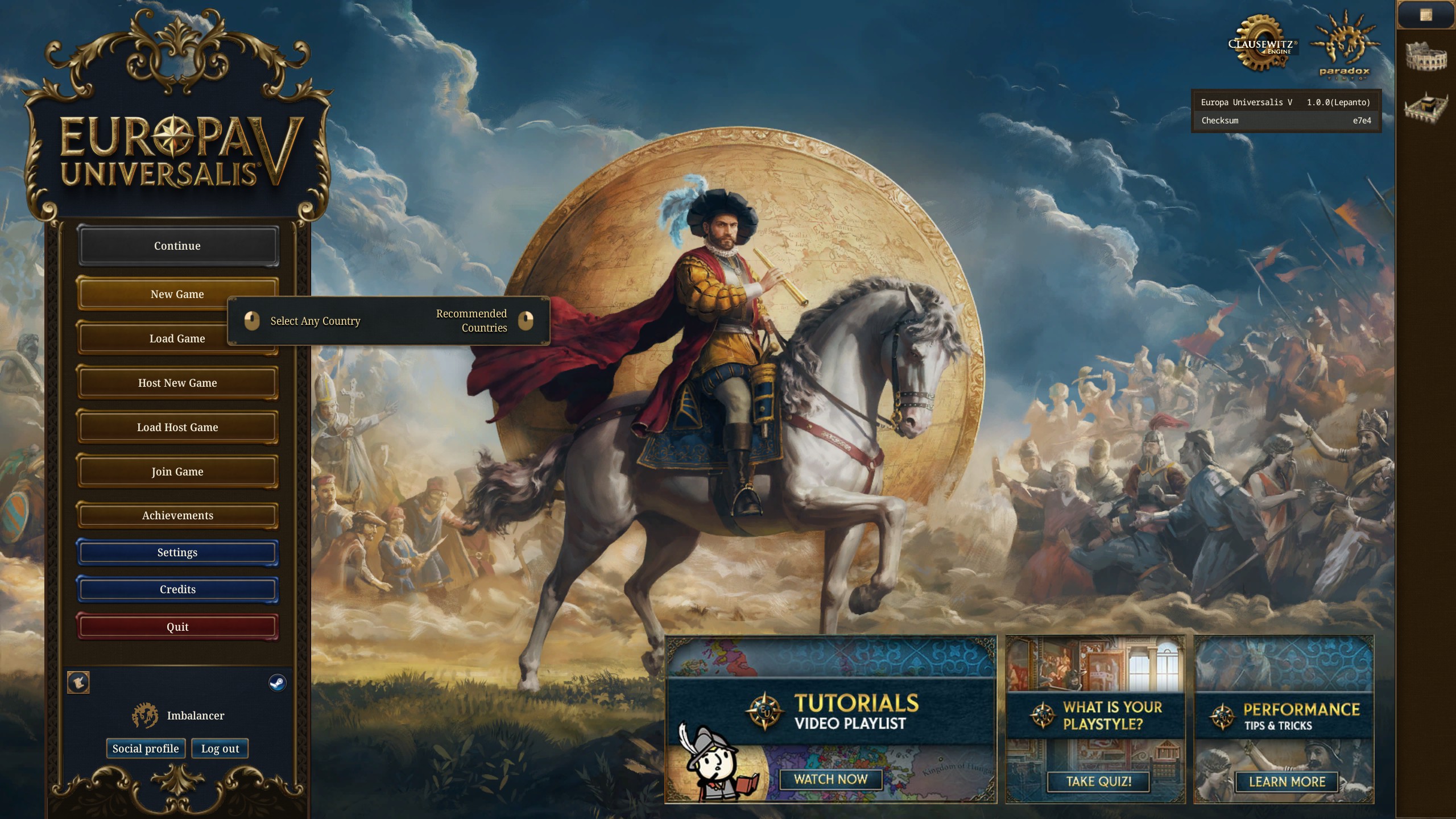 It’s our first run in EU5, so naturally we look at the list of recommended countries.
Among Norway, Castile, the usual newcomers’ favorites… and then one suggestion stands out.
It’s our first run in EU5, so naturally we look at the list of recommended countries.
Among Norway, Castile, the usual newcomers’ favorites… and then one suggestion stands out.
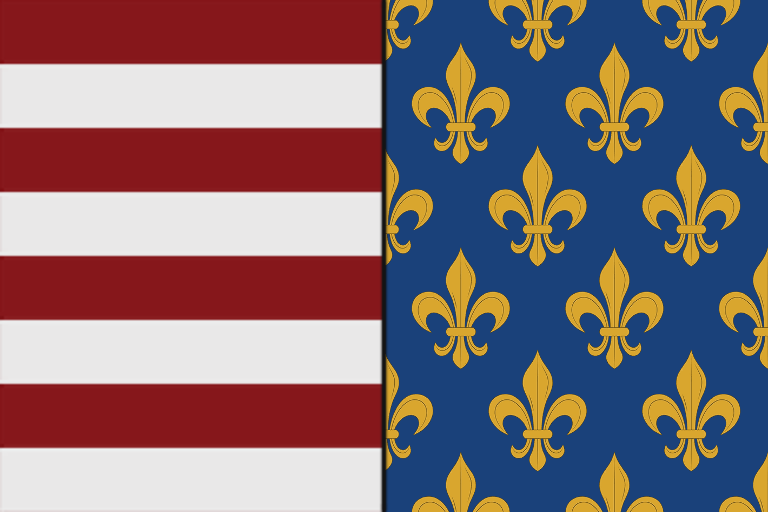
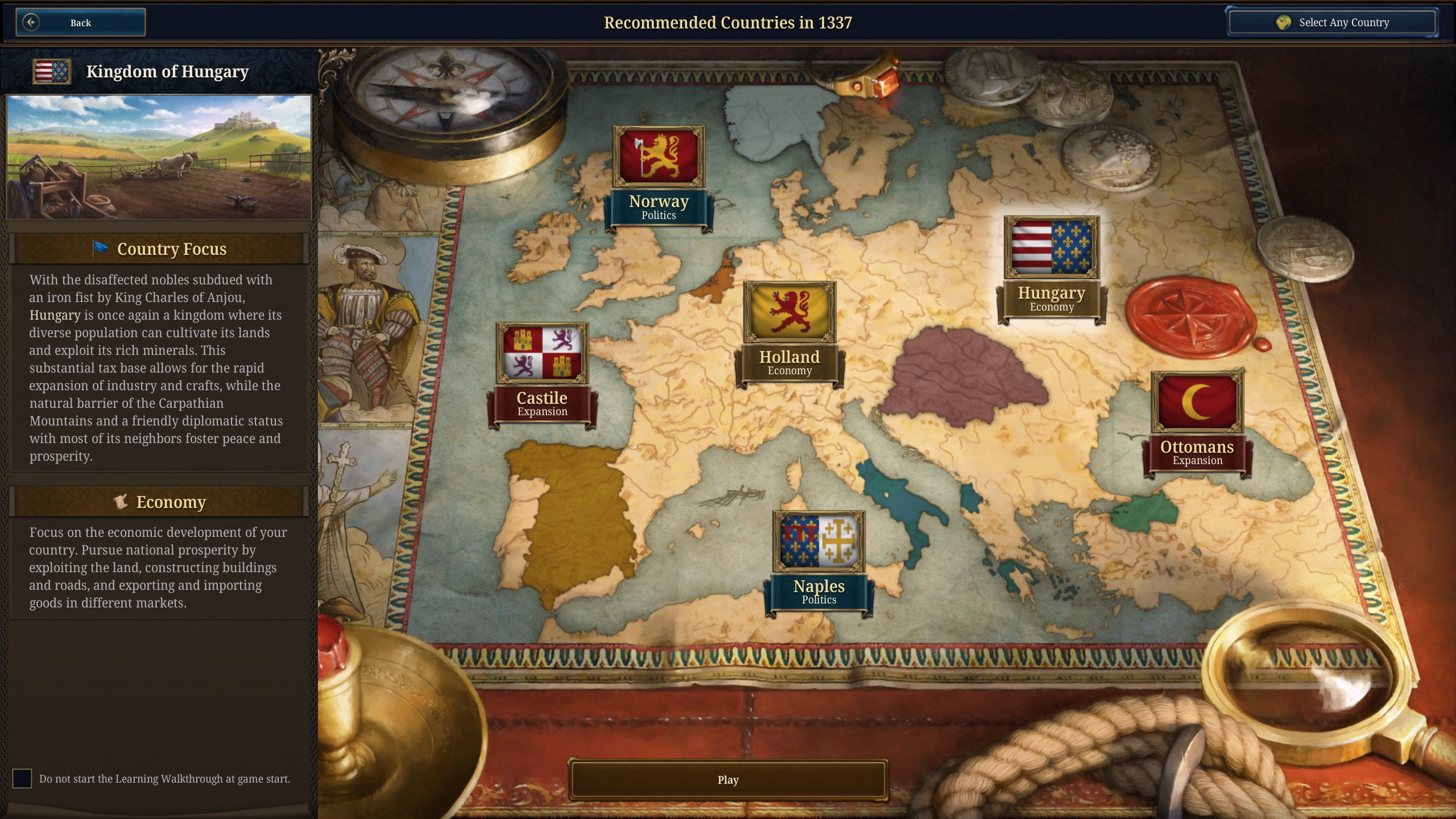 Kingdom of Hungary —at least in our minds— “the best beginner learning country!”
And as if fate agreed, the official EU5 quiz we took beforehand also pointed us toward Hungary—sealing our choice before the campaign even began.
The First Thing We See
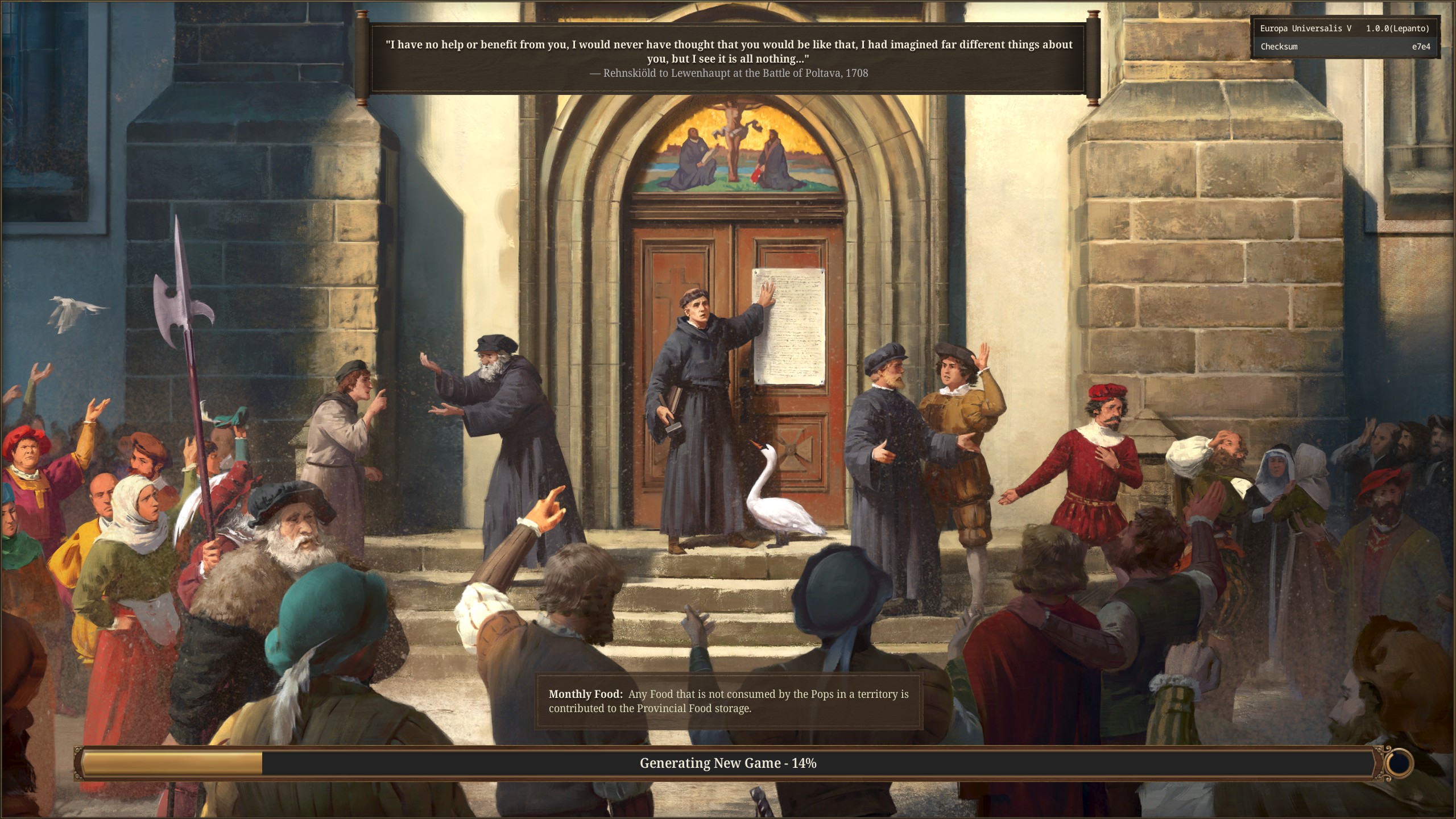 The loading screen greets us with a gorgeous illustration of Martin Luther nailing the Ninety-five Theses to the church door.
It’s just a loading screen, yet the artwork is detailed enough to give the game a pleasantly thoughtful first impression.
(Also, if you’re curious about the historical moment: wikipedia/Ninety-five_Theses )
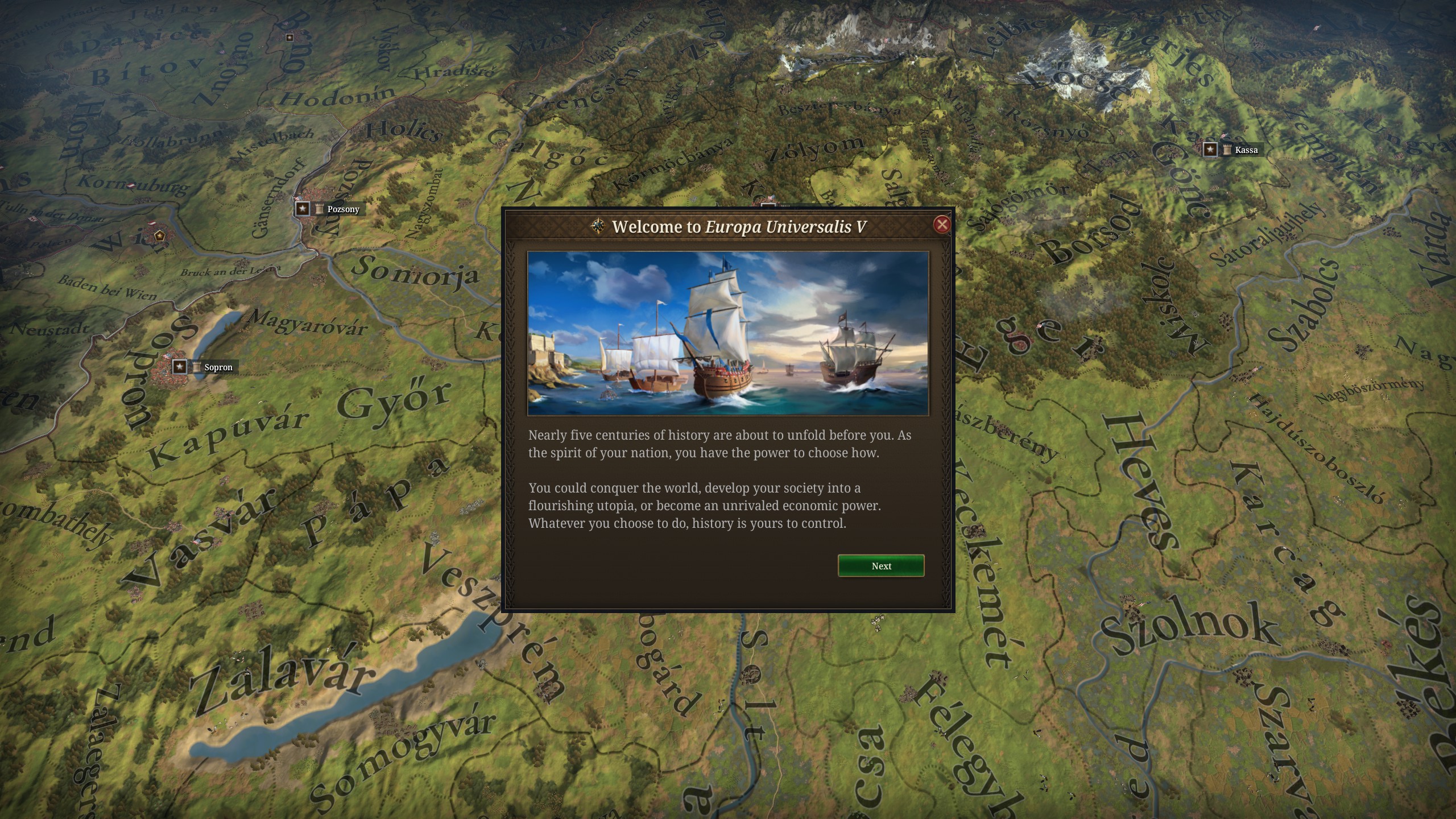
Welcome to Europa Universalis V!
Basic Tutorial: The Budget
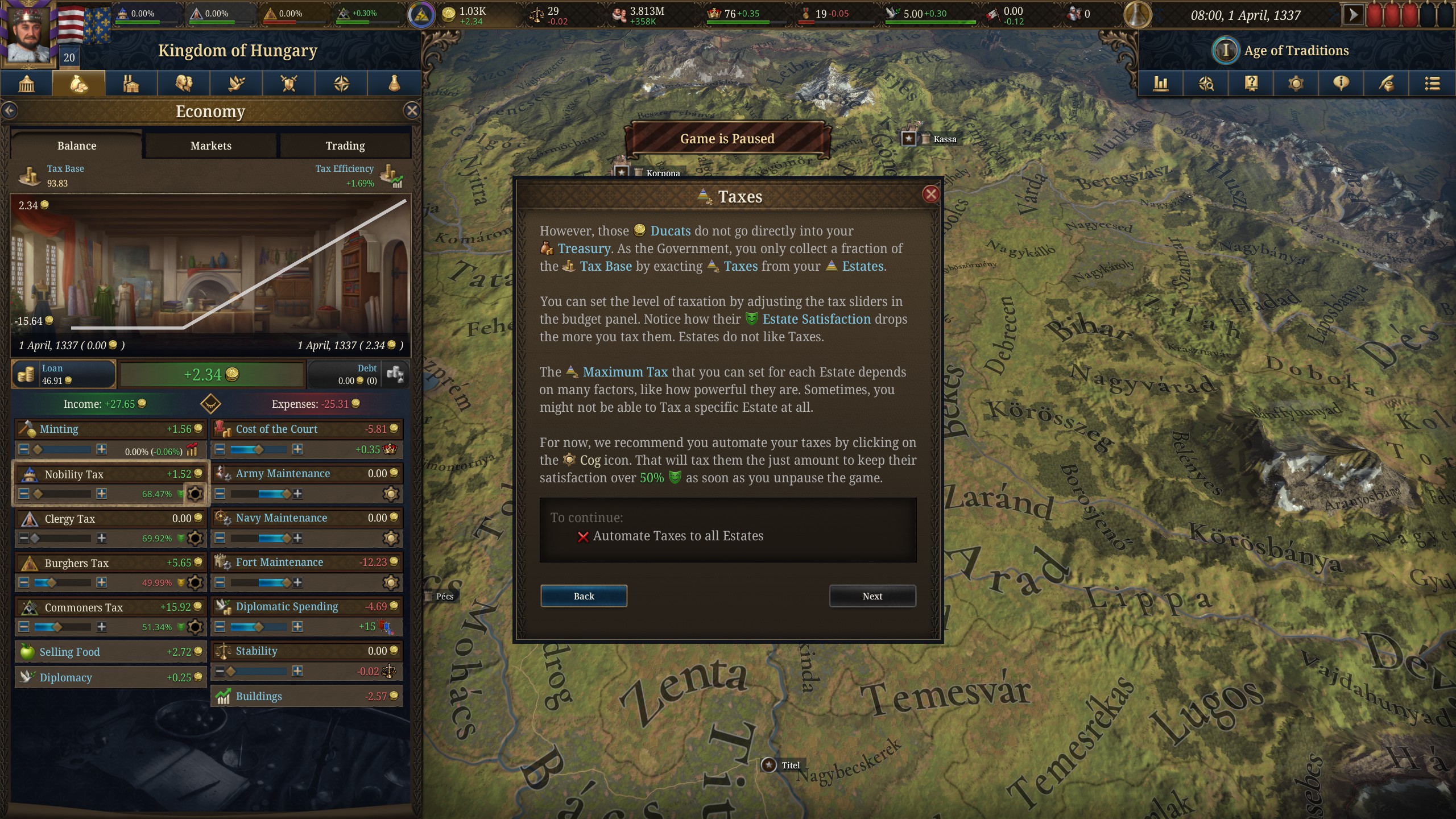
Small UI typo spotted: on the third line of the Taxes box, “exact” appears instead of “extract”. Always fun to catch these early-game quirks. 乾杯~!(´▽`)
The tutorial kicks off with the economy - which feels appropriate for a Paradox game.
First lesson: money is complicated.
-
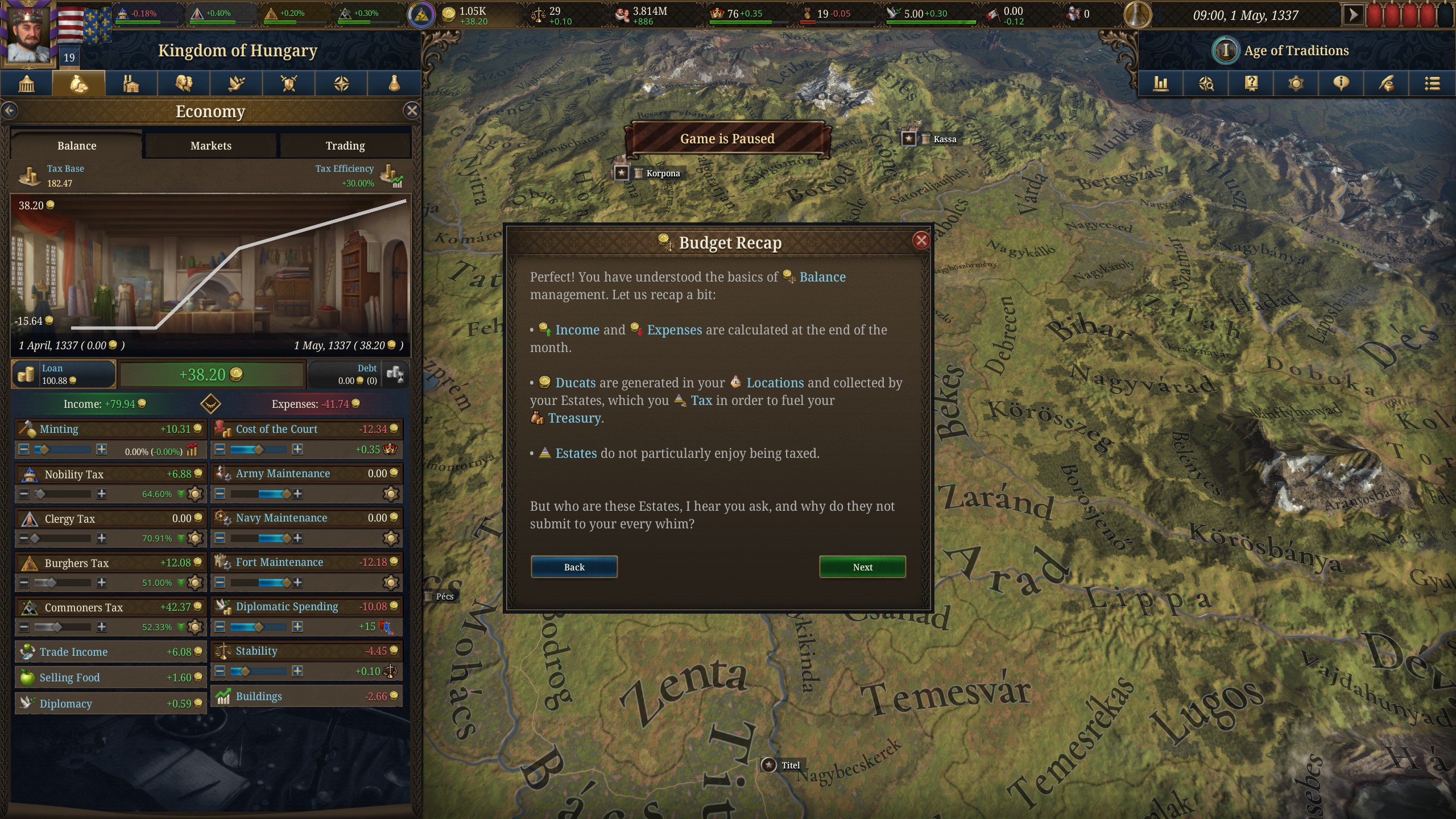
Every month, your budget recalculates.
-
You can mint money… but mint too much and inflation says hello.
-
Each location produces money through economic activity → estates extract wealth → the crown taxes the estates → we get paid.
On the top left you can see the four estates: Nobility Tax, Clergy Tax, Burghers Tax, and Commoners Tax. They basically represent the four competing social classes… all of whom want something from us.
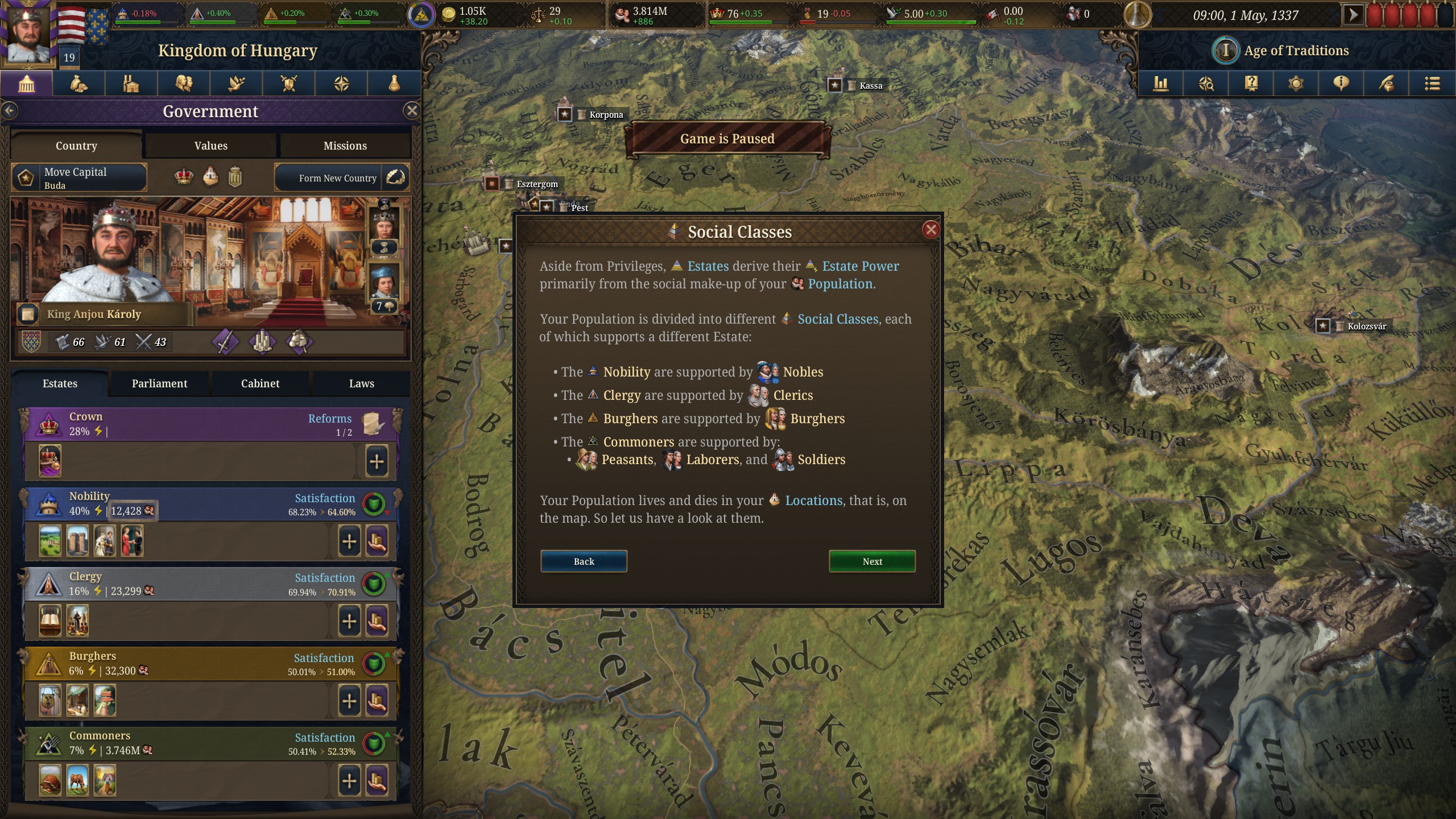 On the left panel we get our first look at the population breakdown. Their influence and power distribution are shockingly unequal:
12,000 nobles have 40% political power.
The crown (us!) has 28%, not terrible, but clearly the nobility run the show… for now.
On the left panel we get our first look at the population breakdown. Their influence and power distribution are shockingly unequal:
12,000 nobles have 40% political power.
The crown (us!) has 28%, not terrible, but clearly the nobility run the show… for now.
Meanwhile, the upper-right panel displays our monthly expenses: Our court (to preserve legitimacy), Our army and forts, Diplomacy, Stability. As Hungary, we avoid naval expenses entirely since we’re landlocked (yay!?), though at this early stage we also lack a true standing army, relying instead on levies as most countries did at the time.
A Closer Look at Our Capital: Buda
Next, we inspect our capital: Buda, the heart of Hungary.
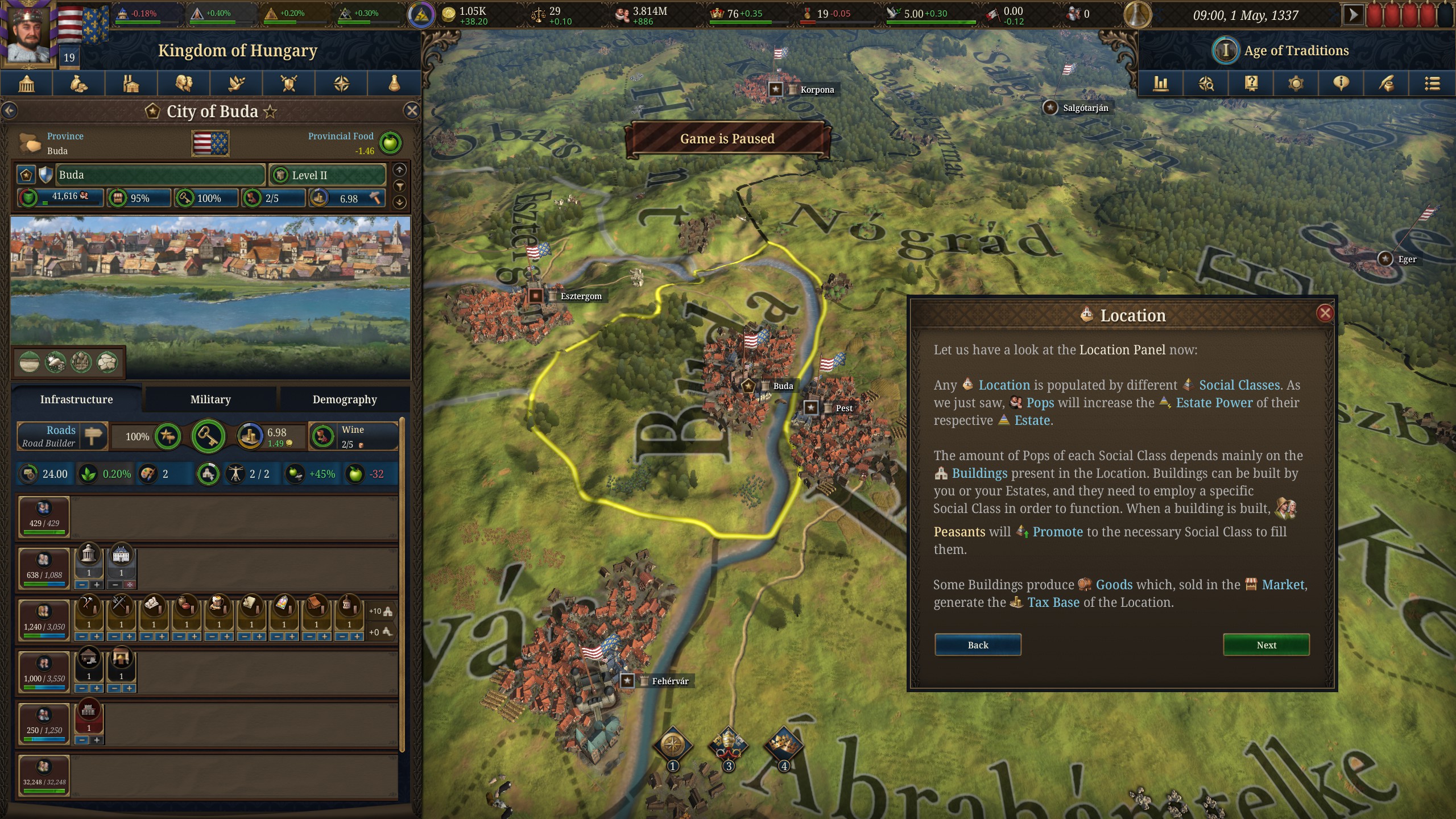 We see the six population types working in different buildings.
Nobles don’t work (surprise), and peasants just work the fields, so they don’t need buildings.
We see the six population types working in different buildings.
Nobles don’t work (surprise), and peasants just work the fields, so they don’t need buildings.
Every location also has an RGO—a Resource Gathering Operation.
Buda’s RGO is wine.
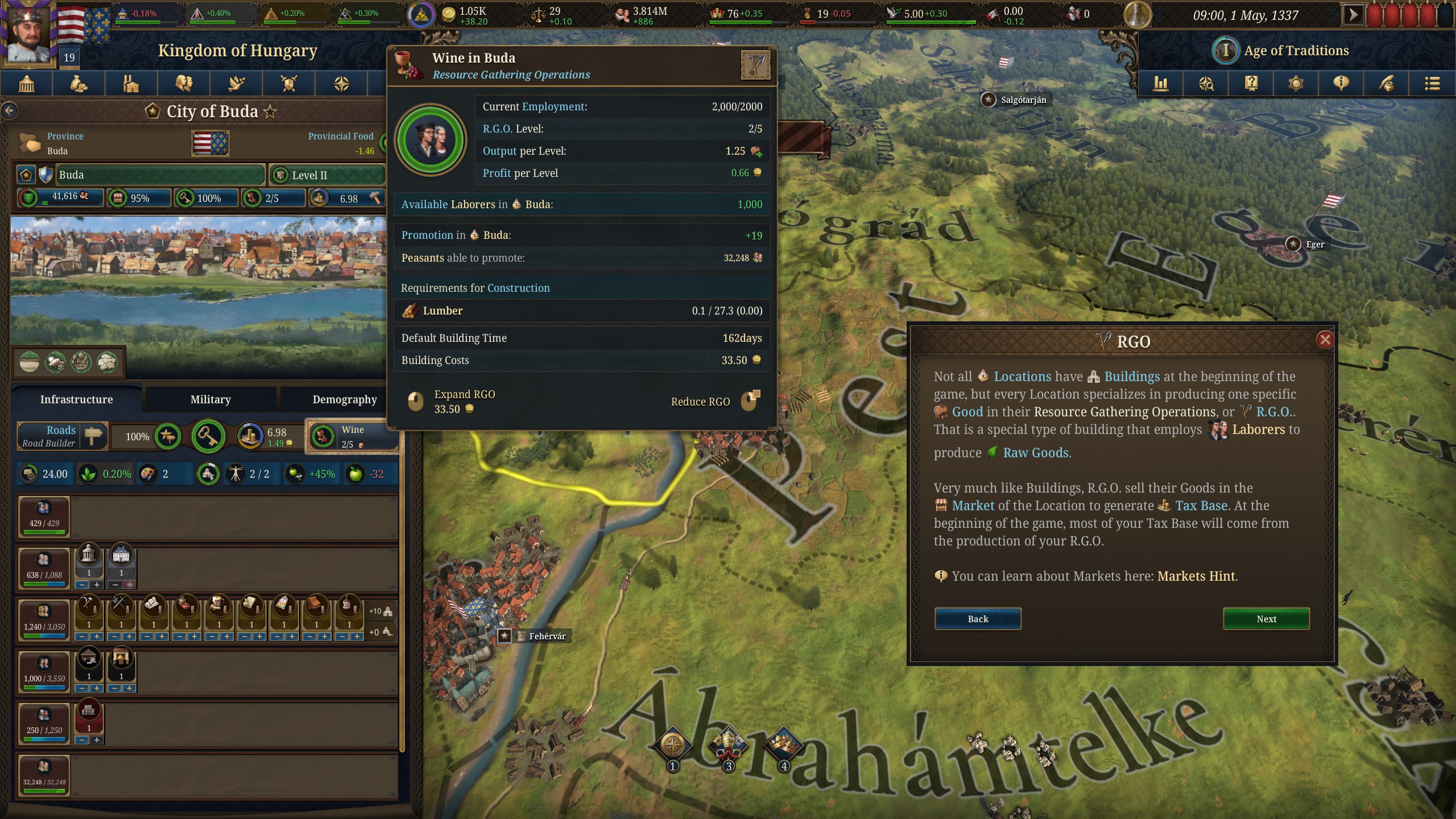 2,000 people making wine.
Excellent. We approve this national priority.
Glug glug~
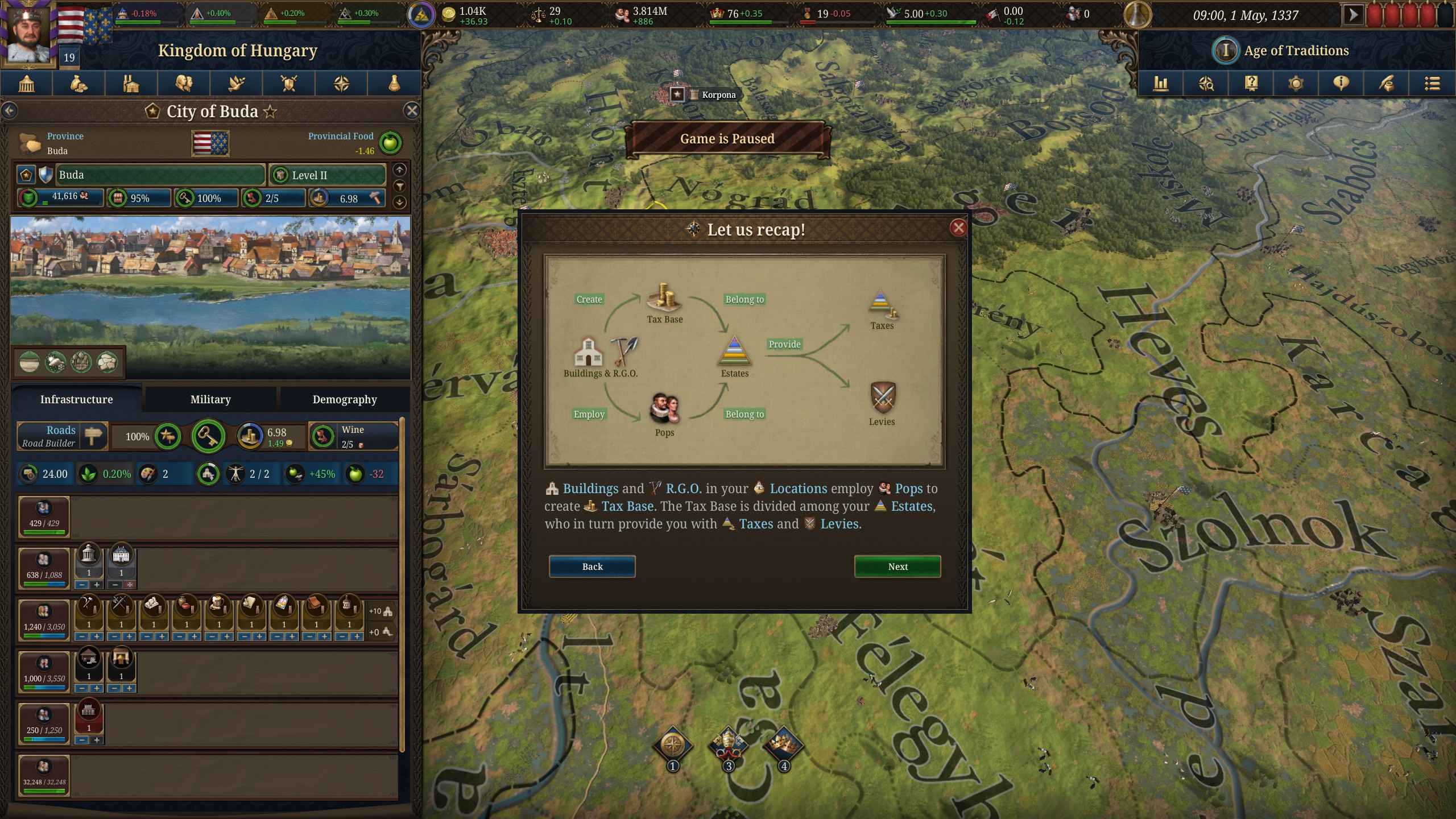 The tutorial recaps the whole loop, but we’ll worry about the full economic cycle later. For now, our priority is straightforward: keep Buda happy, keep the wine flowing, and slowly shape Hungary into something respectable~